FMP Industry research

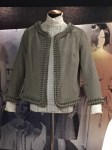
When i had my Developmental stage assessment, one of my tutors said that I should add in more industry research as I hadn’t looked at the industry enough. She said to find designers that I had an interest in and that I would find inspiration for. This research really helped me when doing my customer profile, because it helped me to look at different designers that I liked, which gave me the insight on their customer profile and the ages in which they sell their clothing to. I would find this by looking at the people that followed the designers and also the models that they would wear out their clothing in or especially influencers on instagram that wear their clothing. Two designers that I found really interesting is Charlotte Knowles and Yuhan Wang. I really like Wangs style of draping, especially that some of the draping is left open so that you can see some skin, it reminds me of my nan curtains. However, I really became interested in the style of the gathers that she had on one of the garments. I became interested in the style of the gathering because it was sewn in different shapes instead of the traditional straight stitch.

I really like how the gathers have turn out. The one on the left I wanted to try the straight stitch but in different angles and a variety of sized gaps in-between.  Then the one on the right sewing different angles to see how the gathers would come out whether it would be to much and confusing on a garment. However, I really like the variety of the sizing of each gather on both pieces and the shapes created by the stitching. However, I could develop this further by testing out different materials such as knit and maybe with a pattern to see if it works and doesn’t look confusing or make the pattern look weird.

FMP Customer Research

For FMP its very important to know the customers that your clothes would be worn for. To have a customer in mind does help to create and style your final garment. It gives you a target and a final overview of what kind of colours or printing style or even the final shape of the garment which all needs to be considered for  your customer. I’ve made my customer aged between 20-30 years of age. I wanted to target this age because I feel that at this age people are more expressive with and how they wear their clothing. Wanting new styles and and looking good in what they wear. I like that on my customer board I have been specific about the job description and the amount of money that they would spend when shopping because it helps when researching designers or companies that sell their clothing at this price. It helps to know what materials they use, or how they style their clothing in campaigns, or even the shapes and patterns of the clothing, is it really abstract shaped or is it a simple shape with a bold pattern to make it different then other brands clothing? These are the questions that I want to achieve when researching into my brands. I could develop this further by looking into more designers that my customer would buy from, so that I get a better understanding of the overall styling and colours that they might wear. To help me with this would be to look at a designer on instagram and then to look at people that follow the designer and the connections that the designer has on other brands and designers. customer profile

FMP First Week

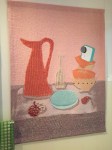
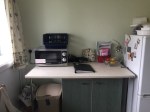
FMP has began and I start my week with going to my chosen exhibitions. My first exhibitions is ‘Home Futures” at the Design Muesum, I wanted to explore this exhibition for the relevance of it looking at homes but to also look at what a house means to someone. Is it a place of safety or a place where you can express who you are maybe through art or through particular furniture? Or even a place that has no meaning but somewhere where you can stay and rest. I wanted to take on these ideas of homes as my nan has lived in her flat in Bermondsey for most of her life, moving there with my grandad. When visiting her house she has objects and furniture from all different eras in her life time. With this exhibition I feel that it helped me to get a sense of using older objects, which has been developed far more than the objects which you see has happened in my nan’s flat. However, there was a few areas in which looked at more modern materials that wouldn’t be seen in my nan’s flat such as a portable office which wouldn’t help to develop any ideas following my proposal. Kiki Van Eijk ‘Softwear’ tapestry helped me with inspiration, looking into creating patterns with knit. Using jugs and lightbulbs and new technology mixed with cakes and other leisurely objects really does link back to my concept of my nan’s flat. I would like to develop this idea further by using nan’s own objects in her flat such as a microwave with old magnets or her old makeup pots with her personal alarm button.

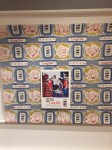
Another exhibition at the Fashion and textiles museum ‘Swinging London’ looking the designer Mary Quant and Terence Conran and a small exhibition, ‘Will you be my Valentine?’ with print designer Natalie Gibson. Both of these exhibitions helped me to understand clothing and style in the 50s and 60s which is a time where my nan would be a young adult who would of been interested in clothing. Using Gibson’s bright, bold prints as inspiration for my own prints. I really like how she then goes to develop that design into knit and tapestry which is what I really want to experiment with, and to maybe develop that further by printing onto the knit. For the Mary Quant and Terence Conran part I want to achieve to get a whole understand of the trend of the time, looking back at some of the photographs of my nan wearing straight dresses, however, it was a repetition of straight clothing and quite plain designs and prints on the clothing. I could take away from this exhibition the short skirts (which she was known for) and the bold colours used in some of the designs to influence my personal research through out my FMP.

FMP Proposal

During my time at Ravenbourne I have found that my weaknesses of drawings especially when designing, have naturally become my strengths. Over the course of my developmental stage I have found that I review my work in a more acceptable and open way. Allowing me to become conceptual with my designs and collages. I have learnt and experimented knit using a knitting machine and have created patterns by heat pressing and printing metres of fabrics.  Using my own drawings and collages that I have made to create these prints. Working my way through my developmental stage I have gained the skills of working fast and meeting deadlines, although I have to still develop my speed in my work, I have developed the skill of working faster but still producing good work that I am confident to show to my tutors. However, I have found my own, confident style. I feel that I still need to develop further but I have really enjoyed exploring different aspects of fashion.

For my Final Major Project I have decided to look at my nan called Jean. She has lived in Bermondsey for her whole life which has shaped her personality and has aided her to become who she is today. She has seen and experienced the change of Bermondsey though out her time as a child, all the way to her old age of 87. She worked in Peek Frean, an old biscuit factory, from the age of 15 years with her family, as most families worked together in the biscuit factory.  Walking into her flat transports you from her past to present with features technology such as a TV and microwave, however it has something from every era such as video players, video tapes, old polaroids of family pictures, mix-match of wallpapers and carpet and glass makeup cases. I want to show the evolution of Bermondsey from an old working class community to a affluent area using her images of her past and features in her flat such as the furnishings to help aid Jeans life in Bermondsey. I will achieve this by using past images of my nan and any photographs of her as a child or working images. To visit exhibitions that show the working class life of Bermondsey and the evolution of furniture or objects that show the change over the course of my nan’s life. I will look at articles and research into books of past images of Bermondsey. To use objects and materials to create conceptual ideas and shapes to help develop my designs and ideas. I will make patterns and hopefully incorporate 3D aspects to it. My final outcome will be a garment. My final garment will be for an young audience around the age of 20-25 years old that likes contemporary art, reads Daze Magazine and listens to 90s music such as TLC and SNAP!. 

Before FMP commences I will look through all my sketchbooks to see the different aspects of each theme that we have explored to see what has worked well for me and that hasn’t. I will also set up different goals that I must meet during my FMP. One being having a one to one with my tutor to show my progress and to gather any feedback which will help me to develop. To constantly research and keep up to date with my blogs which will record my research and to share with other people that might also have other ideas or criticism that could develop my work to become stronger. 

State of Play: Developmental Stage

Strengths:

I believe that from developmental stage that my strength are my illustrations. From having the project ‘Illustration Week’ it has really helped me to find my confidence in my designs and my ability to draw. Before I came to foundation I hated drawing and was no confident in my designs until that week, and since then have developed them further to successfully create final lineups with them. Another strength from foundation would be the ability to work quick, being able to meet deadlines in a short amount of time has really been able to help me to pick up speed but still create good quality of work, that I am confident to show to my tutors and in my grits with the class. My research is another one, before I would only use the internet to do my researching but now I have been able to push my research further by using other resourses such as books and primary research and going to alot more exhibitions. And I found that doing Deconstruct/ Reconstruct has helped me to look at another side of research that I never thought of before and has taught me to use all different parts of the garment to use in different places.

Development:

For development I feel that I need to improve on making more samples in my sketch books and exploring different materials not just using fabrics all the time. To really explore different materials. I could also improve on the flow of my work for example, drawing first initial ideas, then working on the stand, then back to my book, and then back on stand like a circle, and really dig down to my final design. To also not work backwards, I always come up with my final design before I have even fully done my research. I should really use my research and sketch book idea to then help to develop my final lineup. Also not repeating myself. Although the sketches might be slightly different sometimes I do repeat myself in my designs, so I should really explore more with research and use other places for libraries not just the one at uni.

Please list and describe your plans for FMP in regards to your creative direction:

To look at all sources of research not just books, to go to variety of exhibitions and to look at videos and other resources that I have never used before. Also to use more stand work look at all stand work sessions such as looking at draping and paper manipulating, but I also want to try using objects to drape with and use on someone not just materials. I wanted to use the objects in my nans flat to explore different shapes on the body and maybe make a cast with them. Using pillows and her curtains to also drape with and I wanted to use a person to drape on preferably on my model so that it fits with the sizing which will help when finally making the garment. To use the facilities in prototyping to create my prints and embroidery that I might want to put on my final garment. Also looking in to technology from the project in developmental stage, maybe using LED lights such as strip lights into my garment, witch would also be incorporated into my patterns and designs which I will look further into.


Autonomous Substrates Week 2

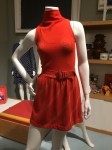
For week 2 I developed my idea of LED light tattoos further by working on the stand using the Stretch Powernet Fabric Latte. As the material is flexible it gave me the idea of stretching it across the body so that it looks like another layer of skin onto so that the tattoos actually do look part of your skin. I heat pressed some patterns that I extracted from my research on the fabric so that it did actually look like I had a tattoo. This was very successful, not only did the print came out really well on the fabric but the fabric colour matched my skin colour so it was perfect to document by taking pictures of the fabric on my arm with the pattern as a mock up. IMG_7526 Working on the stand was very successful because it helped me to also create a silhouette for the shape of my top. However, I could of developed this further bt using different materials to drape with such as the latex to show a variety of how the materials would of worked on the body. In addition, when it came to printing onto the latex it would melt onto the heat press and no image would transfer onto the material. I really like stand work on the left and in the middle however, I don’t think the one on the right is as successful as the other two as its quite a simplistic design and I have seen this shape may of times in the past, I want to create something new to go with my new technical idea.

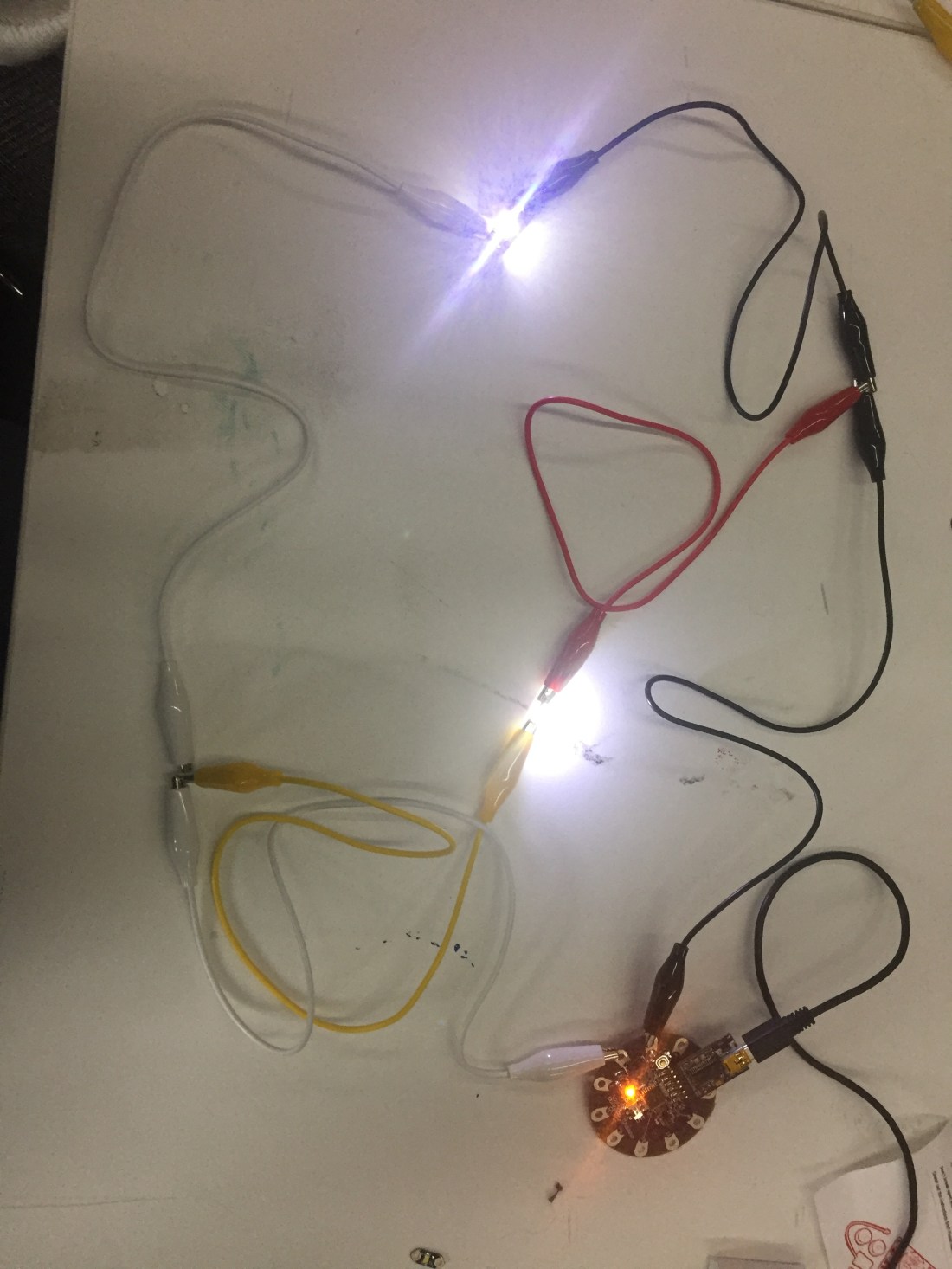
I then went onto actually texting the LED lights onto the top to see if it would actually work. I believe that it was a successful job as each pf the lights worked using a parallel circuit to add as many lights as I could. However, it become annoying when having to have the laptop at the side constantly it was heavy so it sometimes made it hard to add the lights and keep them in place when trying to attach them to the garment. In addition, it was also annoying that you could see the lights through the top, however, I came to like the wirer’s as it would give it a more Industrial effect. I could develop this further ny gathering loads and LED lights and attaching them the the whole top to see if they actually look like tattoos or not.

Autonomous Substrates Week 1

For this project I selected the words Man Ray, mismatch and mark. After researching into each of these themes separately I finally came my final theme of Tattoos. I wanted to look at Tattoos as the work from Man Ray photography looks close at the body, then ‘marks’ as  tattoos are marks on the skin and ‘mismatch’ as the patterns of the tattoos are different from each other. After both work shops I found wearable technology the most interesting   and that I can develop for my final design. My idea was for people that are to scared to have tattoos done or will regret or get bored of their tattoos. I wanted to use the LED lights as tattoos but with sensors so it would connect to an iPad or laptop then you can draw the tattoo that you want and it shows up on the top and then at the end of the day you can just take it off or change your tattoo to something else and you won’t have to go through any pain. IMG_7370 3

Each circuit that we created was successful trying out different circuits using Arduino to add in coding to allow it to create different effects. I really like when you where able to change the light of the LED’s to any colour that you wanted. This really helped me when developing my final idea about whether the tattoos could have colour instead of just black ink effect. However, creating a parallel circuit allowed me to constantly add on LED lights so that there was loads of lights on one circuit which really helped when creating an image on fabric.

The lights shone perfectly through both fabrics but it didn’t work when using wired thread which I had sewn the lights on to the fabric, there was an misconnection so the lights wouldn’t turn on. So I will stick to using the original coloured wirer’s for a successful circuit which will allow me to achieve my final design.

Industry Week 2:Final Garment and Photoshoot

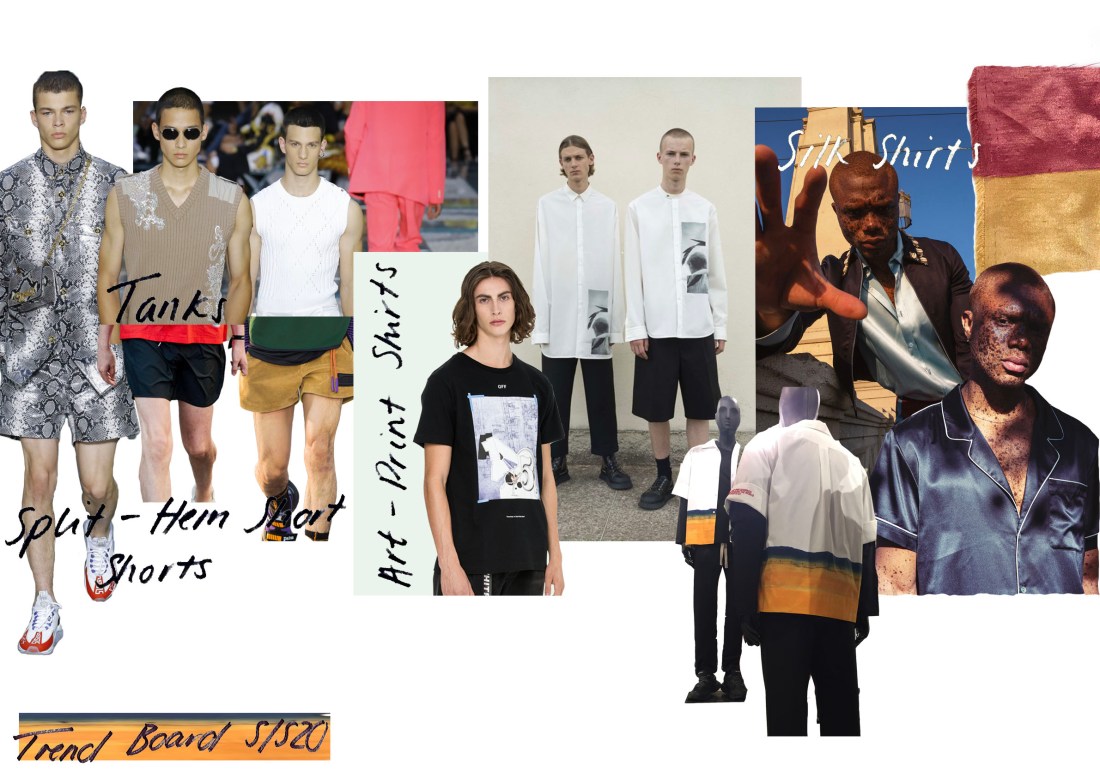
After researching into trends and other designers and still linking with our theme of Trypophobia, I came up with a few designs that kept it relevant to each section. Through out my trend research I found that the top trends where silk shirts that where baggy and overlarge. Another trend was having knit jumpers like grand style gilet/tanks so I thought that these would be perfect for our Marni Shoot. menswear trend board

I really like how I have create this board with fabric swatches and images that our related with the trends, however I feel that I should of created more space between each of the images to make it clear what are the main trends, and I have some images overlapping other trends. Then working on the mannequin using both paper manipulation and draping to extract shapes from to use in my final designs. I feel that the draping was successful because it allowed me to explore how I was going to position the jumper over the shirt because I wanted to break the traditional jumper shapes that I saw on many menswear catwalks. However, when trying the paper manipulation I found it hard to extract shapes from as many images of my research just consisted of holes. In addition, it did allow me to experiment with the details such as the shaping of the sleeves on the shirt or the collar. I found that making a shirt was going to be hard so I had to problem solve when I made a toile for the shirt to see if it was successful and it was. Using Calico for the toile I knew it was going to be easier by which I mean sewing,  than going on to use a silkier fabric for the final shirt, I found quite tricky when trying to keep the pins in place.

For our final Photoshoot, we wanted to keep the theme of the holes by using crumpets. This added humour to our photoshoot which really worked out well when it came to viewing our outcomes we made patterns and stickers with the crumpets to keep that running theme which captured everyones attention especially on the stickers which is what we wanted to achieve. When showing our work and final piece through a slide show one of our tutors gave us criticism. She said that we presented Marni well and energetic, the photos came out really well, however we needed to change some of the images to different images some from the still life for our Look book. She like the final touches with the stickers, the textiles and the shirt and badges that I made for the menswear. However, one thing that I could of developed when making a shirt again was the concentrate more on the shirt collars as you can see the seam allowance when the collar folds out and also the detail of the stitching to make it straighter in some places on the shirt especially when using a different coloured thread.


Industry Week 1 : Marni

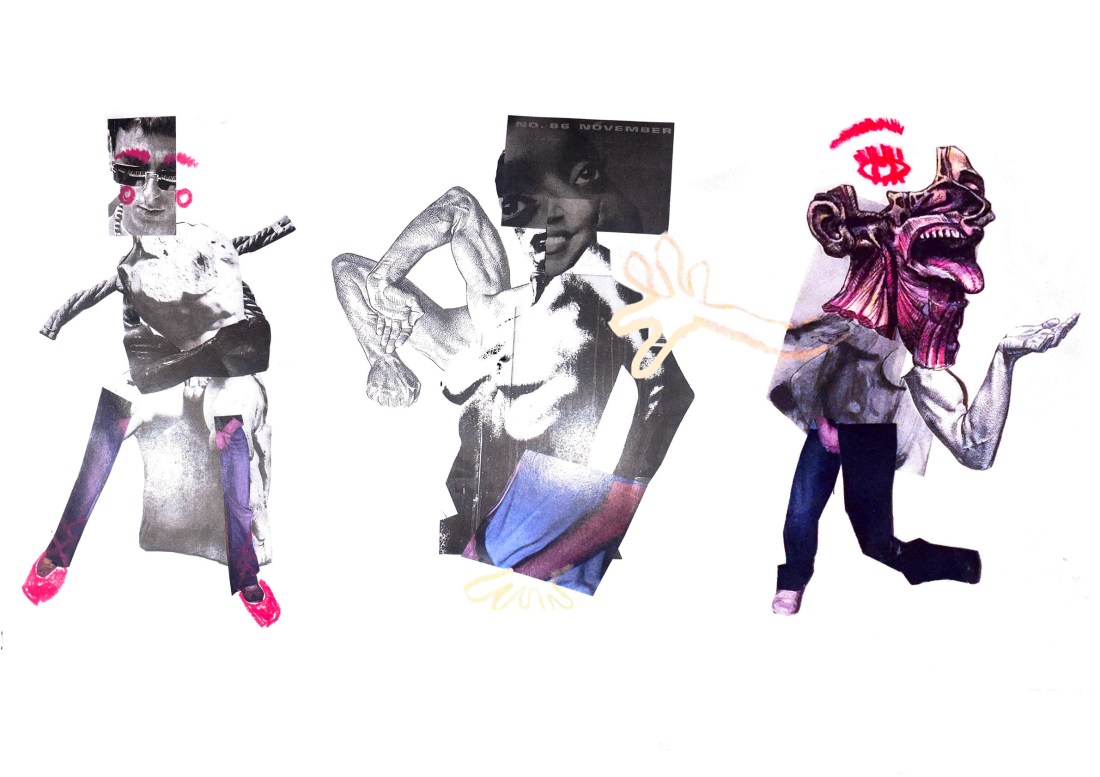
For the industry week I chose to design the menswear for Marni ss20. I normally design for women wear but I wanted to adventure into another area of design that I haven’t done before. To look at the different styles but to also look at the different body shapes and proportions when making that garment. As a group we first came up with our concept. Our first concept was to look at the ‘Perfect’ body to show that a ‘Perfect” body doesn’t exist, so we created colleges of different bodies mismatching together to create this weird and disproportion body that isn’t perfect.

collages

However, we found that this concept was to wide and not refined enough. So, still keeping the theme of the body we wanted to look at phobias especially: Trypophobia, a fear go holes. I really liked this concept board because it was a subject that I have never looked at before and a challenge with the menswear as well as the concept. I really like  how the team really came together with both the designers and Fashion Promotion students pulling all our ideas into one. I also feel that we problem solved as a team really well together as we all knew that our first concept wasn’t right for us and that we needed to look at something more specific, so working together and blurting out different ideas of a concept really helped us to refine to this final concept.

Portfolio Week

For portfolio week I had a 1-2-1 with my tutor to help me develop my portfolio further to a standard for my interviews for other universities. I found it really helpful having another opinion and view on what I should put in or take out and the layout. Going through each page we found some pages and work that needed to be added to enhance the page to look better. I really didn’t like the pattern cutting page and really wanted to develop it further. My tutor said to add heads to the stand work and to change the layout of the page to move the images round. To have the stand work on one side and the process on the other side to make it clear to the viewer but to also add my own personal style.


I feel that this advice has really helped, as it has developed my work further and I really like the heads added to the top of the stand work, because it adds my own personal work so you can see that it was me that done it. He also said to add some more development through sketches to show the garment clearer and what my idea looks like, rather than from my collages. As sometimes its not clear what my idea is. By adding no colour to the drawings, identifies the silhouette which is what I want to come across when they look at my portfolio. It also makes it easier to see details such as zips and pockets. I really like having both collage and drawing on the same page so that the other universities can see how I work and what I can do. To develop this page further I need to add more developments with my drawings on that one design so they can see how I select and work from beginning to end. progressive details design development board